Filament Buying Guide: Don't Waste Money
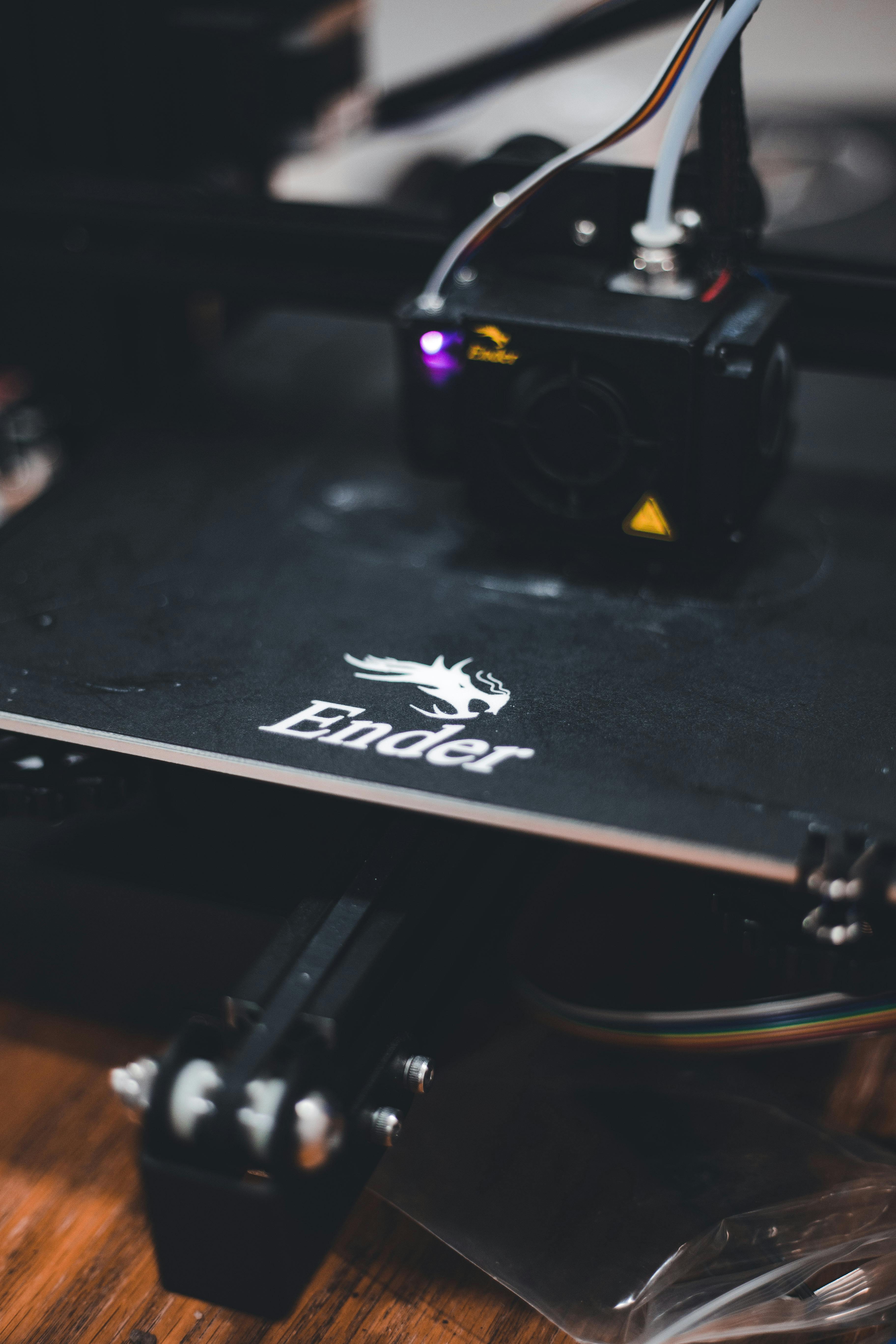
Buy filament for the part, then compare the cost of usable output rather than the cheapest spool. This guide explains material trade-offs, diameter math, and a purchasing worksheet. It is research-based selection guidance, not a comparative test of brands or a record of local failure rates.
Disclosure: Affiliate links may earn a commission. Suggested products are shopping candidates, not proven winners. No spool ownership, photograph, or manufacturer profile establishes measured strength or reliability.
Start with the job requirements
- Write down expected heat, sunlight, chemicals, load, flexibility, and appearance needs.
- Check the exact formulation's technical data and safety information. Glass transition, heat-deflection temperature, and a safe loaded service temperature are not interchangeable.
- Check printer, plate, nozzle, feeder, ventilation, and drying compatibility before comparing prices.
- Buy one spool, qualify a representative part, and record settings and waste before buying bulk.
Material families: trade-offs, not a strength ladder
| Family | Reasons to consider it | What to check |
|---|---|---|
| PLA | Indoor prototypes and display pieces; a useful beginner starting point | Heat exposure, brittleness, and actual part loading |
| PLA+ / tough PLA | A formulation advertised for modified properties | No standardized “plus” recipe; compare the exact data sheet rather than assuming a toughness multiplier |
| PETG | Functional parts needing its balance of toughness and heat resistance | Moisture, stringing, plate adhesion/release; not automatically food-contact safe |
| TPU | Flexible mounts, bumpers, and similar parts | Hardness, geometry, drying, and feed path; 85A is softer than 95A on Shore A |
| ABS / ASA | Appropriate heat-exposed parts; ASA is a candidate for weathering resistance | Enclosure, emissions management, shrinkage, and product-specific service limits |
| Nylon / PC and blends | Specific wear, thermal, or mechanical requirements | Exact formulation, drying, hardware, chamber requirements, and dimensional change |
Matte and silk describe appearance, not a guaranteed mechanical class. Silk may need a different flow limit and outer-wall speed from ordinary PLA. Color and additives can change behavior; qualify the actual color and product rather than declaring grey strongest or black weakest. Filled blends can be abrasive and may need wear-resistant hardware.
For printer and feeder constraints, use the Bambu X1C/P1S/A1 compatibility guide. For a repeatable small-print checklist, use the X1C spool qualification workflow.
Compare products without unsupported brand tiers
A brand name does not establish the quality of every material, color, or batch. Compare the exact SKU's technical data, available profiles, published quality-control information, net filament mass, spool dimensions, return terms, and delivered price. Marketplace ratings are not controlled material tests.
Manufacturer diameter-tolerance claims can help screen options, but they are not measurements of your spool. Prefer traceable specifications over unsourced “premium” and “budget” rankings. A convenient profile may reduce setup work; it cannot guarantee reliability or mechanical properties.
Diameter tolerance: volume changes with diameter squared
For a round filament, cross-sectional area is π × diameter² / 4. For a fixed fed length, volume relative to nominal is (actual diameter / nominal diameter)². It is not simply the percentage change in diameter.
Calculated examples for nominal 1.75mm filament, not measured spool results:
- ±0.02mm gives 1.73–1.77mm: approximately −2.27% to +2.30% volume per equal length.
- ±0.05mm gives 1.70–1.80mm: approximately −5.63% to +5.80%.
- ±0.10mm gives 1.65–1.85mm: approximately −11.10% to +11.76%.
These are deviations from nominal, not failure probabilities or guaranteed print defects. They assume a circular cross-section; ovality adds another complication. Flow calibration can compensate for average behavior, but not every abrupt local variation. Diameter alone does not explain layer shifts, clogs, or every surface defect.
Cost per usable gram: a worked example
A nominal 1kg of net filament is 1000g, excluding the spool. Use actual net mass when known. Separate finished-part mass from supports, purge, calibration, and failed attempts.
Hypothetical example, not our production data: a delivered $22 spool contains 1000g. Assume 150g goes to supports, purging, trials, and failures. That leaves 850g of finished product. Effective material cost is $22 / 850g = $0.0259 per usable gram. A finished 30g part therefore carries about $0.78 of allocated filament cost.
For comparison, assume a $12 spool loses 300g, leaving 700g: $12 / 700g = $0.0171 per usable gram, or about $0.51 for that same 30g part. Under these assumptions the cheaper spool still has lower material cost. A higher assumed waste rate does not by itself prove the expensive spool saves money.
Add electricity, machine wear, labor, packaging, selling fees, and rejected output separately. Revenue minus filament is not profit. If retries consume valuable machine time, record that time and apply a justified rate instead of inventing an opportunity-cost figure.
Your comparison worksheet
- Delivered cost per nominal kg = delivered price / net filament kilograms.
- Usable mass = net filament mass − support/purge/calibration/failure mass, without double-counting.
- Effective cost per usable gram = delivered price / usable mass.
- Total job cost = allocated filament + energy + labor + wear + other actual costs.
Keep the same part and acceptance criteria when comparing spools. Record actual results; do not assign waste percentages by brand or price tier.
When bulk makes sense
Compare delivered price divided by net mass, not spool price alone. A hypothetical 250g sample at $8 costs $32/kg; a 1kg spool at $22 costs $22/kg; a 2kg spool at $40 costs $20/kg. Those are arithmetic examples, not current offers.
The bulk saving only helps if you can use and store the material. Check holder and feeder dimensions and weight limits; even a 1kg spool is not guaranteed to fit every AMS. Try an unfamiliar product before committing to several kilograms of it.
Moisture: diagnose, dry, then store
Moisture can contribute to popping, rough extrusion, stringing, and poor layer bonding, but these symptoms also have other causes. Sensitivity depends on formulation and environment; nylon and TPU often need particular care. There is no universal “one week open means ruined” rule.
Use the exact manufacturer's drying temperature and duration, including spool limits. Use a controlled dryer suitable for the material rather than assuming a household oven holds low temperatures accurately. Sealed storage with maintained desiccant slows reabsorption; it does not reliably dry wet filament. Check whether a product advertised as a dry box actually includes active drying.
A smaller, project-led starter purchase
For indoor prototypes, start with one unfilled PLA spool in a useful color and sealed storage. Add PETG, a flexible material, or an enclosure-dependent material only when a project calls for its properties and the printer supports it. This avoids buying a speculative stack of materials you may never use.
Bottom line: choose requirements first, compare exact products second, and measure usable yield before declaring a bargain. The examples above explain the arithmetic; they do not replace a documented trial on your printer.
Prices in worked examples are hypothetical, not current offers. Check current delivered prices. As an Amazon Associate I earn from qualifying purchases.